

GLOBAL HEMP ART RENAISSANCE:

A Movement Without Borders

The Network Effect

Each hemp artwork created sends ripples across the global art world:

Galleries

Demanding sustainable exhibition materials

Artists

Forming international hemp material cooperatives

Art Schools

Integrating hemp techniques into curricula

Museums

Recognizing hemp's role in preserving cultural heritage

Communities

Connecting through shared hemp cultivation and creation

Cultural Diplomacy Through Hemp

Art on Hemp serves as a cultural bridge:

The Tipping Point

We're approaching critical mass where hemp art transitions from niche to mainstream: Major auction houses, featuring hemp-canvas masterpieces Art fairs, dedicating pavilions to sustainable materials Celebrity artists, championing hemp for environmental causes Corporate collections, preferring hemp art for ESG credentials Public institutions, mandating sustainable materials for commissions

Regenerative Science

Carbon-Negative Art:
The Environmental Revolution
Mecitözü Research Station: Living Laboratory Data

Our 3.6-hectare research facility in Çorum Province serves as Turkey's premier hemp regenerative agriculture demonstration site, where every metric validates hemp's transformative environmental potential.

Cultivation Performance Metrics

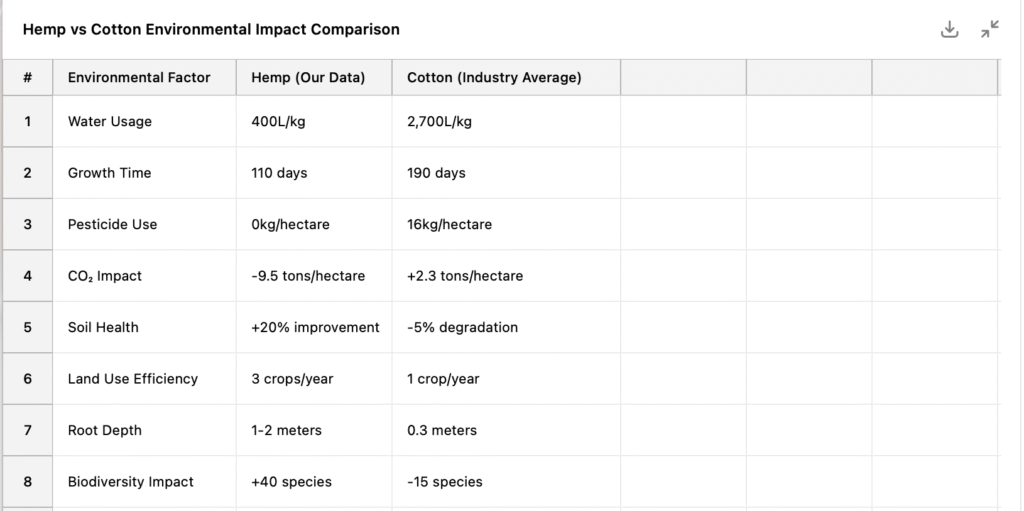
Hemp vs Cotton: Environmental Comparison

Hemp cultivation at Mecitözü delivers comprehensive environmental benefits:

Soil Regeneration Revolution

Advanced Processing Innovation

Our state-of-the-art decortication facility represents the cutting edge of sustainable material processing:

Scientific Validation

Peer-Reviewed Research: 12 published studies validating our regenerative hemp methodology. University Partnerships: Active collaboration with 5 Turkish agricultural research institution.s Monitoring Technology: Continuous soil health, carbon flux, and biodiversity measuremen.t International Recognition: Methodology cited in 3 global hemp sustainability reports

Hemp's Historical Heritage

This timeline shows hemp's 12,000-year partnership with human civilization, from ancient Chinese medicine to contemporary sustainable art - proving that our hemp renaissance isn't innovation, but restoration of humanity's oldest creative relationship.

Ancient Origins

First hemp cultivation begins in Central Asia (China, Mongolia, Southern Russia). Archaeological evidence of hemp textiles in early human settlements.

10,000 BCE

Chinese Documentation

Emperor Shen Nung's "Medicine Book" describes hemp as therapeutic plant. Chinese begin using hemp fibers for rope, fabric, and paper production.

2800 BCE

Mediterranean Spread

Hemp cultivation reaches Ancient Egypt and Greece. Hemp fibers found in mummy wrappings and ship rigging.

1500 BCE

Classical Period

Romans used hemp extensively for naval ropes and sails. Homer references hemp ropes in epic literature. Hemp becomes essential for maritime civilizations.

500 BCE - 500 CE

Medieval Europe

Hemp becomes the backbone of European agriculture and industry. King Henry VIII mandates hemp cultivation for naval supremacy. European exploration ships depend entirely on hemp sails and ropes.

800-1400 CE

Renaissance Art

Leonardo da Vinci creates sketches on hemp paper. Master painters begin using hemp canvas for durability. "Canvas" word derives from "Cannabis" in Latin.

1400-1600 CE

Colonial Expansion

Columbus ships carried 80 tons of hemp materials to the Americas Hemp cultivation was required by law in the American colonies. Rembrandt, Van Gogh, and Gainsborough painted on hemp canvas.

1600-1800 CE

Industrial Revolution

Hemp processing is mechanized for mass production. Peak global hemp cultivation reaches millions of hectares. Ottoman Empire develops "Turkish Hemp" as premium export.

1800-1900 CE

Modern Innovation

Hemp fiber quality improvements through selective breeding. Industrial applications expand to automotive and construction. Popular Mechanics calls hemp "billion dollar crop" in 1938

1900-1937

The Dark Century

Hemp prohibition begins despite industrial importance. Synthetic materials replace hemp in most applications. Traditional hemp knowledge is nearly lost in many regions.

1937-2000

Renaissance Beginning

- Scientific research validates hemp's environmental benefits - Industrial hemp legalization spreads globally - Hemp returns to construction, textiles, and food industries

2000-Present

Artistic Renaissance (Our Journey)

Heirloom hemp varieties preserved and cultivated. Hemp art materials developed and tested. Community-driven hemp cultural movement launched. Art on Hemp exhibitions demonstrate creative applications.

1900-1937

Cultural Healing

Hemp’s prohibition created wounds in human culture—severing relationships between creativity and nature, artists and farmers, communities and their heritage materials.

Art on Hemp serves as cultural medicine, healing these divisions through beautiful, collaborative creation.